Possible Pakistan-nexus Backdoor Targeting Afghanistan
On August 29, 2026, a ZIP file containing an executable named Special Job Opportunities and Recruitment Information in Various Ministries of Afghanistan.exe and a DLL named dgxi.dll was uploaded to Virus Total from Afghanistan. The executable name and the upload origin suggest the likely targeting of an Afghanistan government agency. As expected, the executable is a legitimate executable (ApplicationFrameHost.exe, a Windows executable), and the DLL is a malicious library that is side-loaded by the renamed executable.
 Figure 1: Zip content.
A review of the side-loaded DLL revealed a targeted backdoor using the following C2: 185.235.137[.]35:9000.
Backdoor Overview
The DLL establishes persistence by making a copy of the renamed ApplicationFrameHost.exe executable using GetModuleFileNameW to retrieve its own path and copying itself and the accompanying DLL to %AppData%\Microsoft\ApplicationHost\. The executable is copied as ApplicationHost.exe. Persistent execution is established using the common registry run key HKCU\Software\Microsoft\Windows\CurrentVersion\Run.
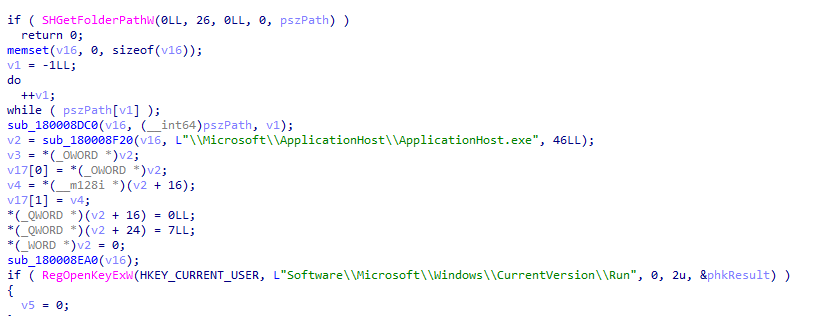 Figure 2: Registry run key.
The main backdoor logic is implemented in an exported function named DXGIDeclareAdapterRemovalSupport(). First, this function implements anti-debugging and anti-analysis checks:
- It detects debuggers with
CheckRemoteDebuggerPresent()andOutputDebugStringA()timing. - It detects the presence of common analysis tools: ida.exe, ida64.exe, x64dbg.exe, x32dbg.exe, windbg.exe, ollydbg.exe
- It performs timing and integrity checks.
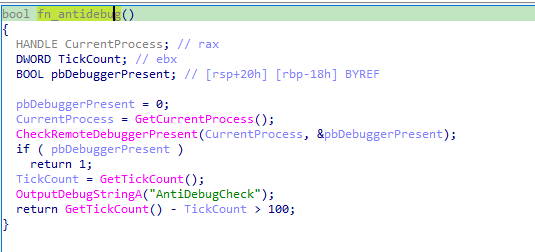 Figure 3: Sample anti-debugging.
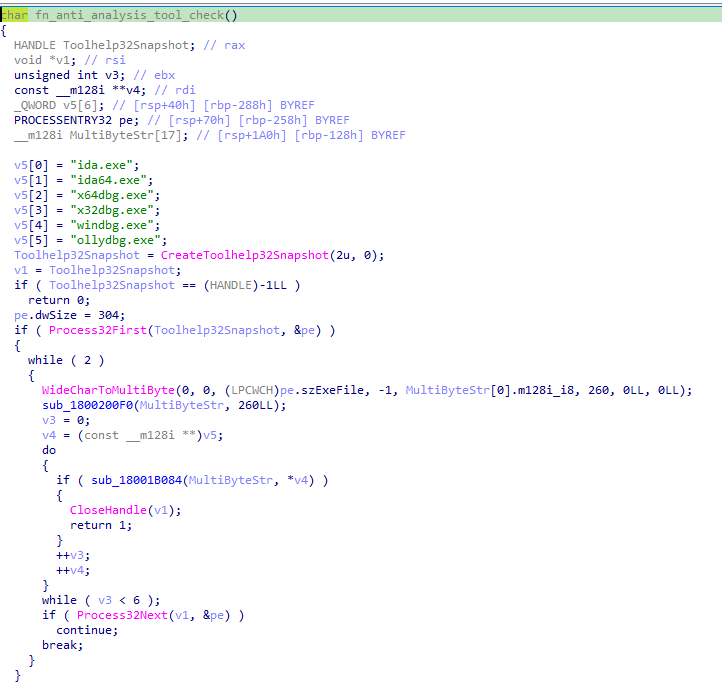 Figure 4: Sample anti-analysis.
The backdoor checks if it is being executed with the --startup argument. If it is not, it drops and opens an embedded decoy PDF named Document_<4digits>.pdf under AppData\Roaming\. The --startup argument is likely used by the malware developer to avoid dropping the PDF with each test run.
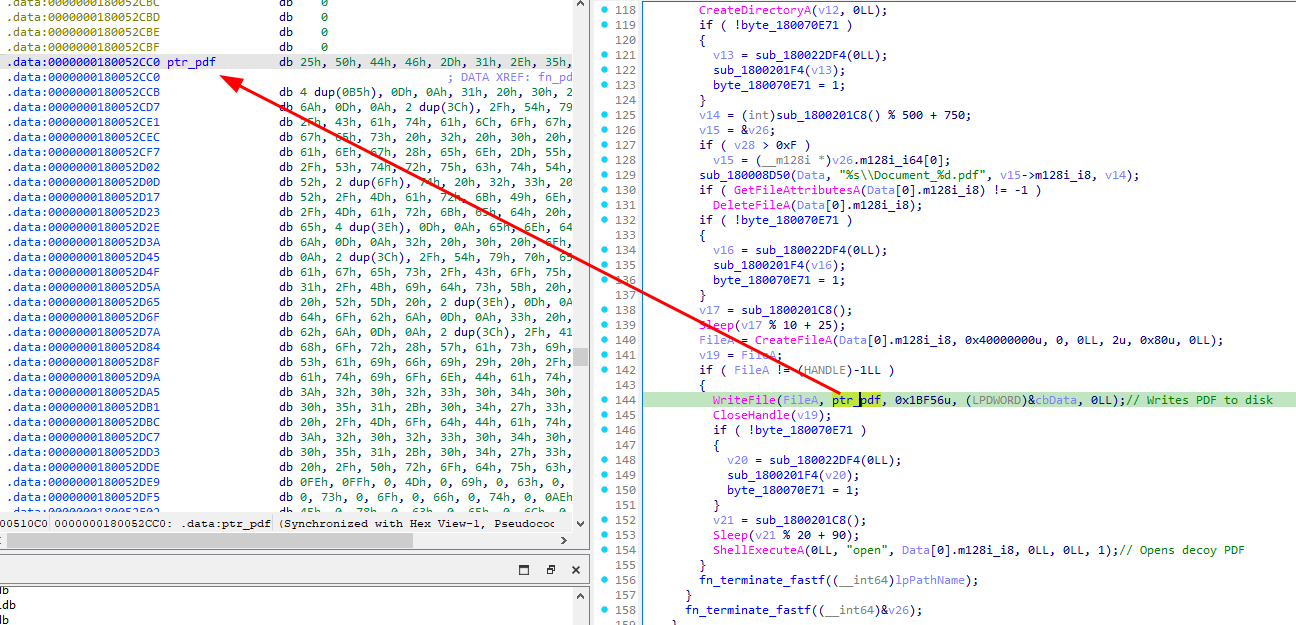 Figure 5: Argument check and execution of embedded PDF.
The embedded dropped PDF is in Pashto and is titled ریاست الوزراء - د دفتر لوی ریاست - د مسؤلینو لست (machine translation: Office of the Prime Minister - The Office of the Director General - List of Officials ). The PDF contains a list of individual names and their corresponding position name, salary, department, and phone number.
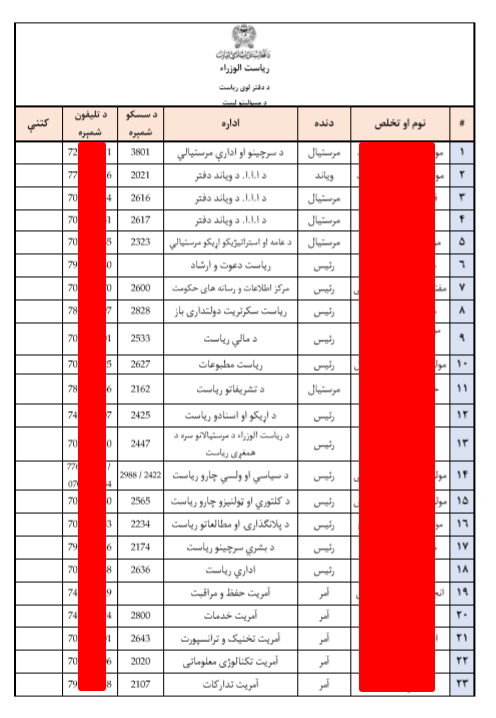 Figure 6: Decoy PDF.
The backdoor configuration is XOR encrypted with key thisscert23$SecretKey206. Upon decryption, we obtain the following C2 infrastructure: 185.235.137.35:9000. This IP address is owned by HZ Hosting Ltd.
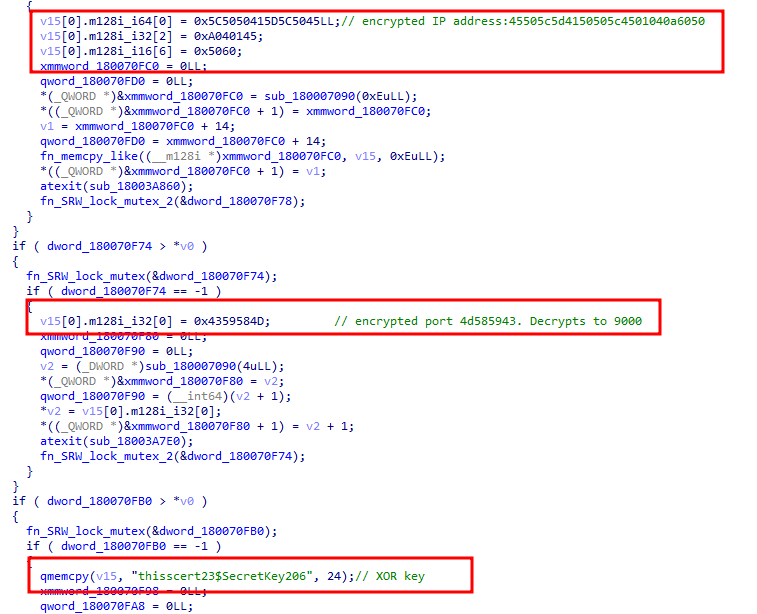 Figure 7: Encrypted configuration.
 Figure 8: Encrypted configuration.
After decrypting the C2 configuration, the backdoor initiates a connection loop to the C2. The first connection sends a registration beacon with basic system information. The following victim machine details are sent in JSON format:
clientId: Uses the MachineGuid from HKLM\SOFTWARE\Microsoft\Cryptography.machineName: UsesGetComputerNameA.osVersion: UsesRtlGetVersionfrom ntdll.dll.clientVersion: Uses a hard-coded value of1.0.0, suggesting this is one of the first releases of this backdoor.
Sample registration beacon:
1
2
3
4
5
6
{
    "clientId": "<MachineGuid>",
    "machineName": "<MachineName>",
    "osVersion": "Windows 10 (Build X)",
    "clientVersion": "1.0.0"
}
The backdoor supports the following 13 commands. The communication with the C2 is mostly in JSON format.
| Command | Action | |
|---|---|---|
| 0xA | Send system profile (cpu, memory, disks, network information, uptime) | |
| 0x14 | Directory and drive listing | |
| 0x16 | Read files in chunks (download victim -> C2) | |
| 0x18 | File upload (C2-> victim) as a .tmp | |
| 0x19 | File write | |
| 0x1A | Finalize write, including renaming .tmp to actual extension | |
| 0x1B | Process execution, receives path and argument. Uses “cmd.exe /c start” for non-executables | |
| 0x1D | Delete file/directory | |
| 0x1E | Process listing, retrieves pids, parent process pids, number of threads, working set size, and path | |
| 0x20 | Process termination by pid (with TerminateProcess) | |
| 0x28 | Create a shell (Spawns hidden cmd with anonymous pipes) | |
| 0x29 | Kill the shell | |
| 0x2A | Input to shell (raw C2 payload for cmd stdin ) |
All packets include the 0xDEADBEEF magic number, protocol version, message type, and payload length. The payload is typically JSON, but some commands, like file transfer and shell commands use a mixed binary format containing a JSON header followed by raw binary data.
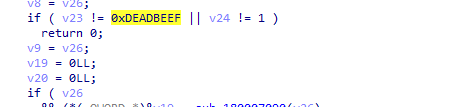 Figure 9: Checks for the 0xDEADBEEF magic number in the code.
 Figure 10: Sample magic number in a packet.
IOCs
- ZIP file:
d69d27a94c78889fc8694e13c122438125eb3d3e6023e0624b3137c7f982a852 - dgxi.dll:
a6ceacda670b88e8a8ec9ff5da6a77d9f1c896d6479b2dadb700474a8c408f80 - C2:
185.235.137[.]35:9000